Celebrating 6 Months in Myrtle Beach
A couple days ago marked six months since my wife and I officially moved to the Myrtle Beach area, and I found myself reflecting on how 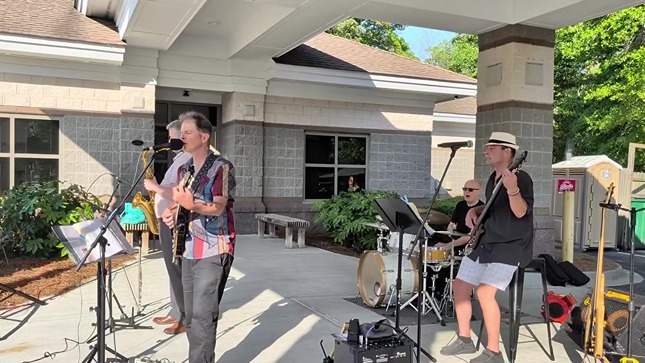 much has changed during that relatively short period of time. In some ways, it feels like we just arrived. In other ways, it feels like I’ve lived an entirely different life already since getting here. Relocating as a musician is a strange experience because your personal life, your professional life, your social life, and your artistic identity are all deeply intertwined, so when you move, it’s not just a change of scenery—it feels like rebuilding an entire ecosystem from scratch.
What makes the experience even stranger is that we moved immediately after what was probably the most successful professional year I’ve ever had. In 2025, I had more students than ever, more gigs than ever, and more financial momentum than I’d ever experienced in my life. From the outside, leaving at that moment probably would have looked irrational to some people. The funny thing is that we had already made the decision before that year really peaked. We had already decided by the end of 2024 that we were going to move, and by early 2025 we were already traveling down here looking at houses and making plans.
In fact, we bought the house months before most people even knew we were leaving New York. We kept it quiet for a long time because we wanted to make sure everything was finalized before announcing anything publicly. Looking back now, I’m actually grateful that my final year in New York was so strong because it gave us additional financial stability heading into a period that I knew would involve uncertainty and rebuilding. Even though I felt optimistic about the move, I wasn’t naïve enough to think I could relocate to an entirely different region and instantly recreate decades of professional relationships overnight.
Starting Over Musically
That part has probably been the most humbling aspect of the entire experience.
When you’ve spent years building a reputation somewhere, you stop realizing how much invisible momentum you’ve accumulated. People know your name. They know your bands. They know your teaching. They know your personality. They know your work ethic. They know what to expect when they hire you or recommend you. Then you move somewhere new, and suddenly almost none of that history exists anymore in the minds of the people around you. You walk into a room and you’re just another musician nobody knows yet.
During my first few months here, I think I felt a subtle pressure almost every time I played publicly. Every jam session felt important. Every interaction with another musician felt like some kind of audition. I think I was unconsciously trying to prove myself constantly, even if nobody else expected me to. Looking back now, I can see that this mindset created tension in my playing because instead of simply interacting with the music, I was too focused on whether other people were impressed with me.
Looking back, I can also see that some of the pressure I felt during those first months wasn’t actually coming from other musicians at all. It was coming from the stories I was telling myself. When you enter a brand new scene where nobody knows your history, it’s easy to unconsciously assume you need to prove your worth constantly. That mindset creates tension—not just mentally, but physically. You can feel it in your playing, in your body, in the way you interact socially. Ironically, the harder I tried to prove myself, the less authentically I actually played.
I think part of what has shifted over these six months is recognizing that external circumstances didn’t create all of that pressure—some of it came from my own internal programming. Years of ambition, performance, comparison, and professional identity can quietly train you to equate your value with how impressed other people are. Letting go of that mindset doesn’t mean becoming less driven. If anything, it creates space to become more honest, more creative, and more genuinely connected to the music itself.
The Jam Session That Changed Something
Recently, though, I’ve started to feel a shift happening internally.
A couple nights ago, I went to two jam sessions in one evening, and it struck me how much the experience resembled my very first full day after arriving in the Myrtle Beach area six months ago. On my first full day here, I drove up to Wilmington for a jazz jam and then drove back down toward Little River for another session later that night. At the time, I was desperately trying to meet musicians, introduce myself, and establish connections as quickly as possible.
This recent night felt very different emotionally.
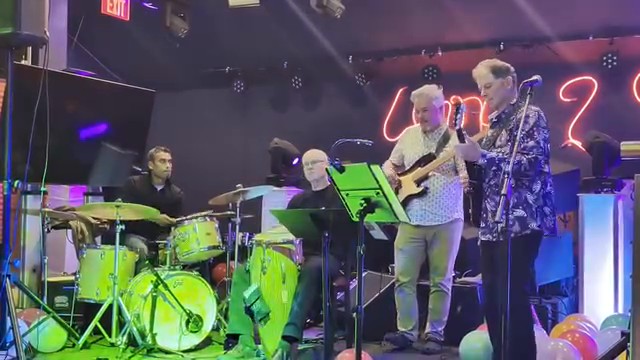
The first stop was a Brazilian lounge and restaurant called Boteco VIP where several excellent musicians were playing, including some professors associated with Coastal Carolina University. The room was lively because students were celebrating graduation week, and there was a great atmosphere in the room overall. Friends I’ve met over these past six months were there, including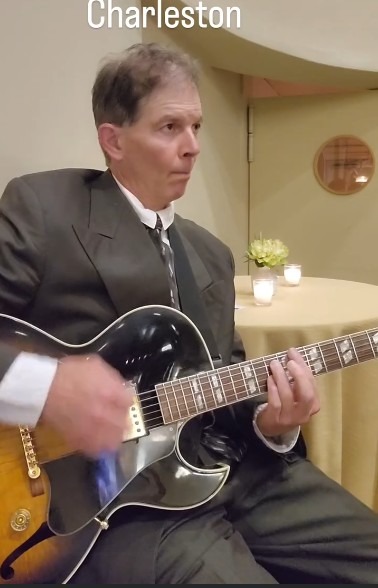 musicians like Cliff Hackford, Bruce Whitcomb, Mike Duva, and others, so the night felt social and welcoming rather than intimidating.
The biggest difference, though, was internal. I didn’t walk in feeling like I needed to prove myself anymore.
Part of that shift comes directly from studying with Ronan Guilfoyle over the past year. One of the things he has been encouraging me to do is leave more space in my playing and become more interactive with the rhythm section instead of constantly filling every available moment with notes. That sounds obvious in theory, but psychologically it can be surprisingly difficult, especially for improvisers who have spent years associating activity with creativity.
Before I walked into the jam session, I actually set a reminder on my phone telling myself to physically remove my hand from the guitar after every phrase I played. That might sound ridiculous to some people, but I knew I needed something physical and concrete to break the habit of overplaying. Once I started doing it, something interesting happened. Instead of obsessing over what I was going to play next, I started actually hearing the music around me more clearly.
I found myself reacting to the rhythm section instead of performing on top of it. I started trying to make each phrase relate meaningfully to the phrase before it instead of simply unloading disconnected vocabulary. Most importantly, I had more fun than I’ve had in a long time because the music stopped feeling competitive and started feeling conversational again.
Building My Own Vision
That realization tied into another important lesson these six months have reinforced for me, which is that if you truly have your own artistic vision, you’re probably going to have to build it yourself.
There’s absolutely nothing wrong with joining someone else’s band and helping execute their vision. In many ways, that can actually be simpler psychologically because your role is clearly defined. You learn the material, fulfill the role expected of you, and support the larger structure that somebody else already created.
Shortly after moving here, I auditioned for several established local bands. They were all good bands with capable musicians, and I genuinely respect the work they do. But after each audition process, I found myself realizing the same thing over and over again: I don’t think I’m naturally wired to spend my life simply occupying a predefined role within someone else’s artistic framework.
I enjoy creating things from the ground up. I enjoy shaping musical direction, combining styles, building concepts, adapting arrangements, and designing experiences around what feels artistically exciting to me. The more I reflected on it, the more I realized that my long-term fulfillment probably depends on nurturing my own musical visions rather than trying to fit neatly into somebody else’s structure.
Sunset Salsa and The Way Band
That realization has already influenced some of the projects I’ve been building here in Myrtle Beach.
One of the moments I felt proudest during these first six months happened on Cinco de Mayo at El Cerro 29, where Sunset Salsa performed. What made the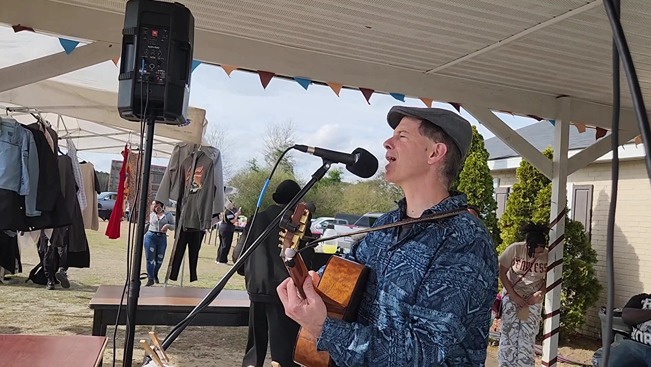 performance especially exciting to me was that it naturally evolved into a hybrid of Sunset Salsa and The Way Band. Instead of rigidly staying inside one stylistic lane, we blended Latin music, party-band energy, dance music, pop, rock, and improvisation into one flexible musical experience that adapted organically to the room.
That experience clarified something important for me artistically. I’m becoming less interested in rigid categories and more interested in flexibility, interaction, and responsiveness. I don’t necessarily want my bands to feel locked into one narrowly defined presentation style. I like the idea that the same core group can emphasize different aspects of its personality depending on the audience, the venue, the occasion, and the atmosphere.
The Financial Reality of Rebuilding
At the same time, I’m also learning that artistic freedom comes with practical challenges.
One thing social media often hides is how financially stressful rebuilding can feel, especially during the early stages. Even though I still teach online and retained some students after moving, maintaining long-term teaching relationships over Zoom is simply harder than teaching people in person consistently for years. Some students continue successfully online, while others gradually drift away because the dynamic changes when you’re no longer physically part of their local routine.
So financially, this transition has absolutely involved uncertainty.
At the moment, I only have a small number of Myrtle Beach-based students after six months. I’ve had moments where I worried about money and wondered how quickly things would stabilize. There’s definitely a psychological difference between having a fully established local business and rebuilding one piece by piece in a completely different environment.
At the same time, I’m proud that we planned carefully enough that I haven’t needed to rely on emergency savings. When we sold our house in New York, my wife and I intentionally set aside part of the proceeds as a safety cushion specifically because we knew relocation might involve temporary instability. The fact that we haven’t needed to touch that money yet makes me feel grateful and reassured, even during periods where income has fluctuated.
Signs of Momentum
What keeps me optimistic is that I can already see momentum slowly building.
Certain venues have started bringing me back repeatedly, which matters far more to me than random one-off gigs. Tidal Creek Brewhouse has booked multiple projects, including Blue Train and jazz performances. El Cerro has booked both solo performances and full-band performances repeatedly. I’ve also started getting private parties and event work through platforms like GigSalad and Thumbtack, which has helped broaden my local visibility.
Another encouraging sign is that local musicians have started hiring me occasionally as well. That may not sound huge, but when you first move somewhere, every outside referral matters because it means somebody trusted you enough to think of you for work. In the past six months, I’ve already gotten a couple calls from other musicians for gigs and substitute situations, and I think those small moments represent the beginning of deeper integration into the local scene.
What’s also been encouraging is realizing that my integration into this new musical ecosystem hasn’t been limited to Myrtle Beach itself. In just six months, I’ve already found myself traveling throughout coastal South Carolina and southern North Carolina—playing gigs in places like Georgetown, Dillon, and Charleston, networking in Florence, attending jam sessions in Loris, auditioning and meeting musicians in Conway, and making multiple trips to Wilmington, which has already led to two upcoming Sunset Salsa bookings later this year. I’ve also booked work in places like Ocean Isle Beach, Oak Island, Southport, and other surrounding areas, which has helped me see this transition not simply as “starting over in Myrtle Beach,” but as gradually getting to know an entire regional musical community.
The Multiple Musical Paths I’m Building
I’m also beginning to understand more clearly what my long-term vision actually is here.
For a while, I thought maybe I needed to narrow myself down into one extremely specific musical identity because modern marketing advice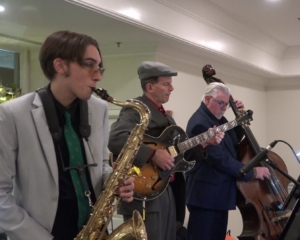 constantly emphasizes specialization. But the truth is that I genuinely enjoy multiple musical roles, and I don’t think pretending otherwise would feel authentic. Right now, I’m essentially building several interconnected musical services simultaneously, and each one fulfills a different creative need for me.
I enjoy solo instrumental guitar because it allows for subtlety, nuance, and atmosphere. I enjoy solo guitar and voice performances because they create direct audience connection and flexibility. I enjoy The Way Band because it allows for high-energy interaction and adaptation to different crowds. I enjoy Sunset Salsa because I love Afro-Cuban grooves, rhythmic layering, and dance-oriented energy. I enjoy jazz ensembles because improvisation and interaction remain central parts of my musical identity. And I enjoy Blue Train because blues music taps into something raw, direct, and emotionally honest.
Rather than seeing those different projects as distractions from one another, I’m starting to view them as interconnected parts of the same larger artistic personality.
Life in Myrtle Beach
Living in Myrtle Beach itself has also been different than I expected in some ways. Before moving here, I think I imagined constant noise, crowds, and tourist chaos everywhere all the time. But because we live in North Myrtle Beach and arrived during the slower season, the reality has actually been much quieter and calmer than I anticipated. During many winter nights, the neighborhood felt almost eerily peaceful compared to what I imagined beach-town life would be like.
At the same time, there have definitely been cultural adjustments.
Back where we lived previously, we almost never worried about theft or locking things constantly because we were in a more rural environment. Here, neighbors immediately warned us not to leave valuables in the car because break-ins occasionally happen in the area. It’s not some kind of disaster zone by any means, but it was still an adjustment psychologically because it represented a very different environment than what we were used to.
On the positive side, though, we’ve slowly started building community here.
We’ve met neighbors. We’ve developed friendships with musicians and local business owners. I joined BNI almost immediately after arriving, which helped me begin forming relationships outside the music scene as well. That has been valuable not only professionally but personally because relocating can feel isolating if you don’t intentionally create opportunities to meet people and become part of the local fabric.
Becoming More Authentically Myself
More than anything else, these first six months have reinforced the importance of becoming more authentically myself artistically.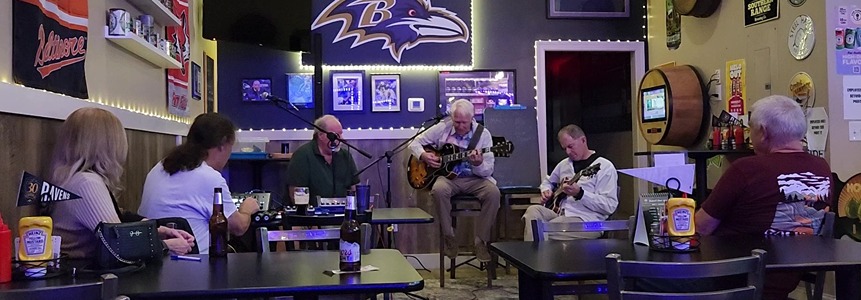
That probably sounds vague, but to me it means becoming less concerned with impressing everybody and more concerned with honestly expressing what I actually love musically. It means trusting that my combination of influences, interests, and experiences has value even if it doesn’t fit neatly into existing categories. It means building projects around genuine enthusiasm instead of constantly second-guessing whether something is strategically “correct.”
I’m also realizing that I don’t need every venue to love what I do. I don’t need every musician to understand my approach. I probably don’t even need to work at dozens and dozens of venues constantly. What I really need are a handful of strong partnerships with places and people who genuinely appreciate the atmosphere and musical experience I bring.
Looking Ahead
Looking ahead, there are several things I’d love to continue building here over the next year. I’d love to establish a regular jazz night with a rhythm section where musicians can sit in weekly and build community around improvisation and interaction. I’d love to expand Sunset Salsa further, especially through collaborations with Latin dance instructors and dance communities throughout the region. I’d also love more Way Band performances, more solo instrumental residencies, and more opportunities to continue blending different musical worlds together in ways that feel natural and exciting.
Most importantly, though, I simply want to keep growing into the version of myself that enjoys music more deeply and performs with less ego attached to every note.
That might actually be the biggest change these six months have produced.
When I first arrived here, I think part of me was still trying to prove something constantly. Now, I’m starting to feel more interested in communication, interaction, groove, atmosphere, and authenticity than in impressing anybody. Ironically, I suspect that shift will probably make my playing stronger in the long run anyway.
Overall, even with the financial uncertainty, the rebuilding process, the occasional stress, and the moments of doubt, I truly don’t regret the move at all. I feel grateful to be here, grateful for the people I’ve met so far, and grateful for the opportunities that are beginning to emerge little by little. Most of all, I feel excited by the possibility that the best artistic years of my life may still be ahead of me—not because everything is easy now, but because I’m finally learning to build a musical life that feels genuinely aligned with who I actually am.
If you are planning a wedding, private party, or corporate event and you want to explore your options for musicians to provide live music, book a free music consultation with me or simply write to me on the contact page.

