The Beginner’s Guide to Enjoying Live Jazz
For many people, jazz can seem intimidating. The improvisation, complex harmonies, and spontaneous nature of live performances might make it feel like an exclusive club for musicians and aficionados. But the truth is, jazz is one of the most accessible, vibrant, and exhilarating forms of live music. Whether you’re stepping into a dimly lit jazz club for the first time or attending a major festival, understanding how to engage with live jazz can transform your experience. As a professional jazz guitarist, I want to share a guide to help you truly enjoy and appreciate live jazz performances, even if you’ve never listened to the genre before.
Understanding the Basics of Jazz
What Is Jazz?
Jazz is a musical style that thrives on improvisation, swing, and group interaction. It has its roots in African American communities in the early 20th century and has since evolved into a global art form with countless subgenres, from swing and bebop to fusion and free jazz.
Key Elements of Jazz
- The Melody (or “Head”) – Every jazz tune starts with a melody, often referred to as the “head.” This theme provides the foundation for what follows.
- The Form – Understanding the structure of a tune can help you follow along. Two of the most common forms in jazz are:
- AABA Form – A 32-bar structure where the first two sections (A) are repeated, followed by a contrasting section (B or “bridge”), then returning to the A section.
- 12-Bar Blues – A classic form consisting of three lines of four bars each, which serves as the foundation for countless jazz and blues compositions.
- Improvisation – Unlike classical music, jazz musicians don’t play from a strict score. Instead, they improvise based on the tune’s structure, making each performance unique.
- Call and Response – A conversational aspect of jazz where musicians respond to each other’s phrases, often mirroring or playing off what was just played.
The Live Jazz Experience
What to Expect at a Jazz Performance
When you attend a live jazz show, expect a different experience than a pop or rock concert. Here are some key things to look out for:
- Interaction Among Musicians – One of the most fascinating aspects of jazz is the interplay between musicians. They listen and respond to each other, making every performance unique.
- Spontaneity – No two performances are ever the same. Even if a band plays the same tune night after night, the solos, phrasing, and energy will always be different.
- Solos and the ‘Form’ – Musicians take turns soloing over the song’s form. Pay attention to when a new soloist enters—it usually happens at the “top” of the form.
- Trading Fours and Eights – Sometimes, toward the end of a tune, musicians will “trade” four or eight-bar sections, often with the drummer, creating a dynamic back-and-forth exchange.
How to Listen and Engage
To truly enjoy a live jazz performance, consider these listening strategies:
- Follow the Melody and Form – Listen for the initial statement of the tune’s melody. This gives you a reference point for the solos that follow.
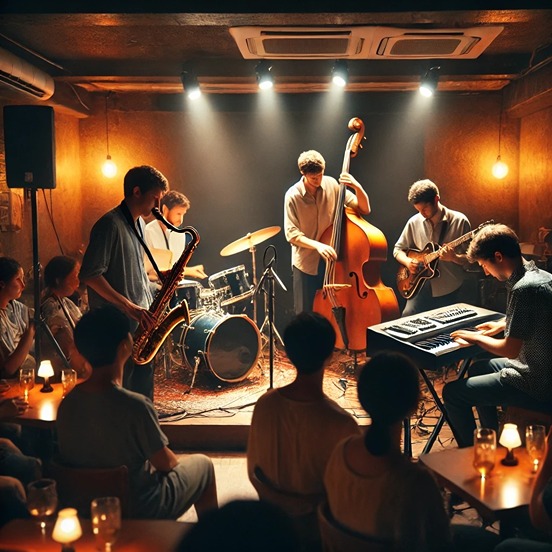
- Watch for Musical Conversations – Notice how the musicians react to each other. The pianist may respond to a saxophonist’s line, or the drummer might accentuate a rhythm from the bassist.
- Feel the Groove – Even if you don’t understand the theory behind jazz, you can always connect with the rhythm. Tap your foot, nod your head, or just let yourself be carried by the groove.
- Appreciate the Solos – Each soloist has their own voice and approach. Listen to how they build their ideas, interact with the band, and bring their personality into the music.
- Notice the Ending – Most jazz performances end by either returning to the melody or through an exciting trading sequence with the drummer before resolving.
Finding Live Jazz Near You
Jazz Clubs and Venues
Most cities have jazz clubs where you can experience live performances in an intimate setting. Look for places that host weekly jam sessions, as these often showcase both seasoned pros and emerging musicians.
Jazz Festivals
Major cities around the world host jazz festivals featuring world-class artists. Festivals are a great way to hear a variety of jazz styles in one place.
Online and Community Resources
If you’re unsure where to find live jazz, check online resources like:
- Local event listings
- University music programs (many have jazz ensembles that perform publicly)
- Meetup groups for jazz lovers
Jazz Etiquette
Jazz clubs and performances often have an unspoken etiquette. Here are some guidelines to help you blend in like a pro:
- Applaud at the Right Time – Unlike in classical music, it’s common to applaud after a musician finishes a solo, not just at the end of a piece.
- Keep Talking to a Minimum – Jazz performances, especially in small clubs, are often about listening and absorbing the music. Try to avoid loud conversations during the set.
- Support the Artists – Buying a ticket, tipping the band, or purchasing their album is a great way to show appreciation.
- Be Open to the Unexpected – Since jazz thrives on improvisation, you might hear a tune played in a completely unexpected way. Embrace the surprises!
How Jazz Teaches You to Be in the Moment
Perhaps the greatest lesson jazz offers—both to musicians and listeners—is how to be fully present. Since jazz is improvised, it exists only in the moment.
As a professional jazz guitarist, I’ve learned that playing jazz forces you to let go of expectations, trust your instincts, and embrace the unknown. Every solo is a leap into the unknown, and the best moments happen when you surrender to the music.
Similarly, as a listener, the best way to enjoy a live jazz performance is to allow yourself to be immersed in the experience. Don’t worry about whether you understand every detail—just feel the music, follow the energy, and let yourself be carried by the spontaneity of the moment.
Conclusion
Live jazz is one of the most exciting and rewarding musical experiences you can have. Whether you’re a complete beginner or a seasoned listener, approaching jazz with an open mind and a willingness to engage will deepen your appreciation for this incredible art form. Pay attention to the melody, the form, the interplay between musicians, and most importantly, enjoy the ride. Jazz is about being present, embracing the unknown, and finding joy in the moment—both in music and in life.
So, the next time you step into a jazz club or festival, take a deep breath, listen, and enjoy the adventure!
—
If you are planning a wedding, private party, or corporate event and you want to explore your options for musicians to provide live music, book a free music consultation with me or simply write to me on the contact page.

