Creating the Musical Life I Was Waiting for Someone Else to Give Me
About a year before writing this, I was preparing to move from Ithaca, New York, to Myrtle Beach, South Carolina. I had spent ten years in Ithaca, built a teaching studio, played hundreds of gigs, formed bands, made records, developed friendships, and gradually become part of the local musical community. Moving meant giving up a great deal of familiarity and starting over in a place where very few people knew who I was.
Before I moved, I wrote what I called a “healing ritual and intention for Myrtle Beach.” I wanted the move to transform almost every part of my life: spiritually, artistically, financially, relationally, socially, and physically. I wanted better gigs, more students, meaningful friendships, greater financial abundance, deeper spiritual practice, more time in nature, and a musical life that felt like a fuller expression of who I actually was.
Musically, I had a fairly specific vision. I wanted to develop my Latin jazz band, find regular jazz work, have a blues band, lead a rock and dance band, and continue performing solo both instrumentally and as a singer-guitarist. I wanted music to be more than a way to make money; I wanted the projects themselves to be interesting, meaningful, and capable of uplifting the people playing and listening.
One year later, the results are much more complicated than either “it worked” or “it didn’t.” In some areas, Myrtle Beach has exceeded my expectations, while in others I am nowhere near where I thought I would be. Some of the things I thought I desperately wanted turned out not to be what I wanted at all, while other things that seemed secondary have become increasingly central to the kind of musician I want to be.
I should also clarify that, as I write this on October 1, I have not actually reached the one-year anniversary yet. I moved on November 8, so there is still more than a month to go before I can technically call this a full year. Even so, enough has happened that I can already see some important patterns, and I am increasingly grateful for how much musical momentum has developed in a relatively short period of time.
Most importantly, I am beginning to understand something about artistic leadership that I wish I had understood much earlier. I used to think that a major part of success was being chosen by the right people, getting the right phone call, or being invited into the right situation. I am now beginning to see that my real task may be to create something compelling enough that the right people want to participate.
I Thought I Wanted Other Musicians to Choose Me
For years, one of my frustrations in Ithaca was that I felt as though other musicians rarely called me to become part of their projects. Almost everything I did had originated with me: I booked the gigs, assembled the musicians, created the concepts, organized the rehearsals, wrote or arranged music, and tried to keep projects moving. Part of me interpreted that as rejection and wondered why somebody else wasn’t calling me to join some great band.
There was a story running quietly in the background that said I was always the one creating opportunities because other musicians didn’t particularly want me. If somebody else were truly excited about my playing, I thought, wouldn’t they ask me to be part of what they were doing? That interpretation was painful, and for a long time I gave it more credibility than it deserved.
Then I moved to Myrtle Beach and something interesting happened. I auditioned for four different bands, prepared seriously for every audition, and every one of them wanted me to join. After spending years thinking I wanted that kind of invitation, I turned all four of them down.
That experience forced me to confront the fact that the thing I had supposedly wanted for years wasn’t really what I wanted. The bands were good; I simply realized that I did not want to organize my musical life around somebody else’s schedule, repertoire, priorities, and vision. I already had too many ideas of my own that I wanted to pursue.
Several of the groups expected their members to remain highly available for future bookings. Some were already frustrated because existing musicians occasionally took other gigs and became unavailable, and I could immediately see the potential conflict because I already had my own projects, teaching schedule, and musical ambitions. I did not want to make a commitment that would eventually create resentment on either side.
What I had mistaken for a lack of validation may actually have been pointing me toward the kind of musician and bandleader I was already becoming. Sometimes getting exactly what you thought you wanted is the fastest way to discover that you wanted something else. In this case, being chosen showed me that I did not actually want my musical direction chosen for me.
Interestingly, as this first year has progressed, some of the calls I once wished for have begun arriving anyway. Recently a bass player called and asked me to play a jazz trio gig, which was significant to me because it was one of the first Myrtle Beach-area gigs that did not originate with me. We were also invited back to play a holiday event that had been my first Myrtle Beach gig after moving here, so I am beginning to experience both sides of the equation: creating my own opportunities while also becoming part of the musical network around me.
Waiting to Be Chosen Was the Wrong Model
There is a romantic idea that somewhere out there is the perfect musical situation waiting to discover you. Perhaps a great bandleader will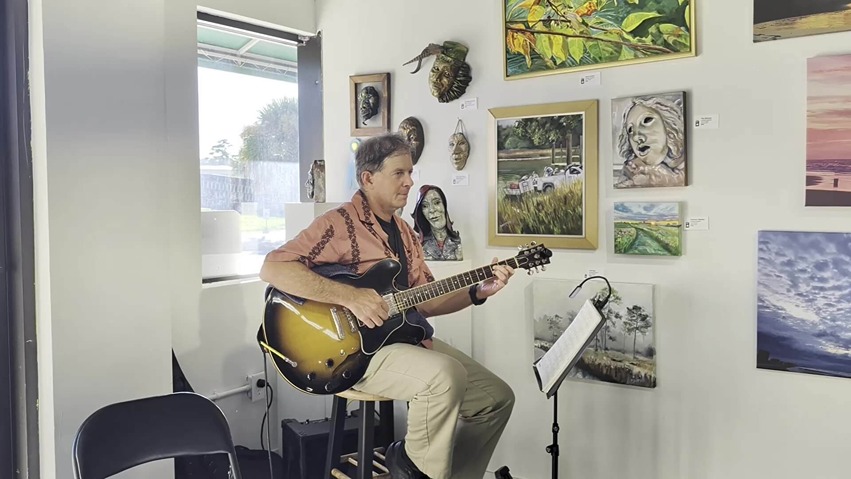 hear you play, recognize your talent, and invite you into a wonderful project that gives you the artistic life you always imagined. Sometimes that happens, and I have certainly had meaningful opportunities that came from other musicians during my career, but waiting for someone else to create the musical life you want is an extremely passive strategy.
There are millions of musicians pursuing their own careers, projects, families, jobs, financial responsibilities, and artistic interests. They aren’t sitting around thinking about what musical experience they can create for me, because they are living their lives exactly as I am living mine. Every musician is on his or her own journey, and each of us gets to decide what to do with that journey.
Once I accept that, a great deal of resentment and unnecessary interpretation begins to disappear. Another musician’s decision about a gig, project, or relationship does not necessarily contain some hidden verdict about me. Most of the time it simply means that person is making choices based on his or her own life.
Instead of asking, “Why isn’t anyone calling me?” a much more useful question is, “What can I create that is worth participating in?” That question puts responsibility back where it belongs. It also gives me something constructive to work on instead of turning somebody else’s silence into a judgment about my value.
Create the Value First
Artistic leadership begins with creating value before expecting anyone else to respond to it. If I want excellent musicians to participate in one of my projects, the first responsibility is mine. I need to develop the concept, work on the music, improve my playing, organize the repertoire, find opportunities, communicate clearly, compensate musicians fairly, and create an environment in which they feel that their time and artistry are respected.
I was reminded of an old story I recently encountered in Brian Tracy’s writing. A king wanted to collect all the wisdom of the world, so he sent his wise men out to gather it, and they eventually returned with an enormous collection of books. The king kept asking them to condense it further and further until, after years of work, all that accumulated wisdom had been reduced to a single sentence: “There ain’t no free lunch.”
The story has circulated in different forms for many years, but the point is simple. Whatever we want to create has a price, whether that price is time, effort, practice, discipline, money, risk, patience, or some combination of them. Wanting something is not the same thing as creating the conditions that allow it to exist.
In other words, I cannot expect something for nothing. That does not mean music should become a cold business transaction, because some of the greatest musical experiences occur when musicians inspire one another and something emerges that none of them could have created individually. But somebody usually plants the first seed, and if it is my project, I need to be willing to plant it.
One example in my own life has been Sunset Salsa, the Latin jazz and dance project I developed before moving south. I am extremely grateful that some excellent Myrtle Beach musicians have become interested in the vision of it and helped me re-create and further develop the sound I had begun building in New York. We have rehearsed and performed gigs while continuing to explore a mixture of salsa, Latin jazz, bachata, merengue, Afro-Cuban music, jazz improvisation, Latin rock, and other rhythmic influences.
The band’s percussionist has responded by putting enormous effort into developing a hybrid percussion setup specifically suited to the music. He has worked on incorporating drums, congas, timbales, bongos, cowbells, auxiliary percussion, and other elements into something one musician can operate. That kind of commitment is exactly the sort of thing I once wished would magically arrive from other people.
Now I understand the sequence better. I created a musical direction, invested in it, rehearsed it, organized it, found gigs for it, and kept pushing it forward. Then other serious musicians became interested enough to invest their own creativity into it.
That does not mean everything suddenly becomes easy once you have a vision. Musicians still have schedules, other commitments, different priorities, and their own artistic lives, and no project is going to matter to everyone equally. But creating something specific gives people something real to respond to rather than asking them to manufacture the vision for you.
The First Year Was More Successful Than It Felt
When I recently reread the intention I had written before moving, my first reaction was surprisingly negative. My teaching income was lower than it had been in New York, my expenses were high, and I was working extremely hard while still dealing with negative cash flow. From that perspective, it was easy to look at the year and feel as if the move had not delivered what I hoped.
My spiritual practice had also slipped. Meditation, which had once been almost non-negotiable for me, sometimes got pushed aside when gigs, lessons, rehearsals, marketing, travel, and administrative work piled up. My wife and I were also seeing less of each other because our schedules had become increasingly complicated.
At one point I became so exhausted that I had to confront the obvious. Whatever I was trying to build could not be built simply by working more hours, because I was already reaching the point where exhaustion was affecting how I thought, felt, and interacted with people. There is no victory in building a musical career that leaves you too depleted to enjoy the music or the rest of your life.
Yet after getting more sleep and looking at the year again, my perspective began to change. The problems were still real, but they were only part of the picture. There was also an enormous amount for which I could be grateful.
When I looked specifically at the musical goals I had written down before moving, almost every one of them had happened in some form. I wanted a Latin jazz band, and now Sunset Salsa is active here. I wanted a blues trio, and Blue Train has played far more frequently in the Carolinas than it ever did before I moved.
I wanted a rock and dance band, and The Way Band has played gigs in the area. I wanted jazz work, and I have played jazz gigs while continuing to develop relationships with jazz musicians throughout the region. I wanted solo vocal work and solo instrumental guitar work, and I have done both.
None of these projects is finished, and some are only beginning. Some have been financially successful while others have been much less so, and there are still plenty of things I want to improve. But they exist, and the move did not destroy the musical life I had built in New York; it gave me a new environment in which to rebuild and reshape it.
The amount of performing work has also begun to increase noticeably. Before moving, people told me that Myrtle Beach could be a busy market for musicians but that building relationships would take time, and one of my drummer friends repeatedly advised me to be patient. Less than a year later, I can already see what he meant.
When I first looked at my October calendar, I counted eight gigs. Then I learned that Tuesday Bluesday at Neat Bourbon Bar would continue through the entire month, adding four more dates and bringing the total to twelve. The previous October, during my final month in Ithaca, I had six gigs, which means that less than a year after moving I now have twice as many October dates as I had after ten years in my previous market.
That is something I am genuinely grateful for. This week alone I have five gigs, including a jazz trio performance at Water Tower Wines that was tremendous fun and two separate performances on the same Tuesday. One of those Tuesday gigs was at Magnolia Bridge, where the residents were welcoming, people sang along, and it was obvious that the music was contributing something joyful to their day.
There are other little milestones that mean something to me too. A wedding rehearsal dinner in Wilmington this week was actually booked before I even moved here, and the couple wanted Blue Train for the event. The day after I arrived in Myrtle Beach — after driving roughly seventeen hours south — I drove another hour and fifteen minutes each way to Wilmington, stopped at the venue, took photographs for the couple, and sent them back so they could see the space.
Almost a year later, we finally get to play that gig. The following day I have another wedding event, this time performing cocktail-hour music with bass and saxophone at a location in Murrells Inlet that sounds like it will be a beautiful place to play. These may be individual gigs, but together they tell me that the roots I have been putting down are beginning to take hold.
Gratitude Does Not Mean Pretending Everything Is Perfect
It is important to me that gratitude not become a way of denying problems. My teaching business is not yet where I want it to be, cash flow still needs to improve, and the workload I created for myself during portions of this first year has not been sustainable. Acknowledging those things is not negativity; it is simply an honest assessment of what requires attention.
At the same time, focusing only on the areas that have not worked would be equally distorted. I am living in a place where opportunities for live music are clearly increasing, where I have been able to launch or continue all six of my main musical services, and where musicians are gradually getting to know me. After less than one year, expecting everything to operate at the level it reached after ten years in Ithaca would not be realistic.
It took me a long time to build my previous teaching and performing life. By the end of my years in Ithaca, I had reached a point where I could save money consistently, something I had not been able to do for much of my earlier life. That did not happen during year one there either.
I am beginning to trust that the financial side here can stabilize as the relationships and businesses mature, but trust does not relieve me of the responsibility to improve the numbers. I still need better student retention, stronger cash flow, smarter spending, and more higher-value performance work. Gratitude and responsibility can exist at the same time.
There are also parts of ordinary life here that I do not want to take for granted. Our house is small, but I have my own room where I teach, work, store my guitars, and run the administrative side of my businesses. We even acquired an inexpensive shed that gave us useful additional storage, which sounds like a small thing but has genuinely made the space work better for us.
Most importantly, we live less than a five-minute walk from the ocean. I can walk or jog on the beach, see the sunrise, and experience a kind of natural environment that simply did not exist in my previous life. I sometimes miss walking in the woods in New York, but being able to walk from my front door to the shoreline in a few minutes is an extraordinary privilege.
I wanted this move to include more connection with nature, and perhaps I initially judged that intention too narrowly because the nature here looks different from what I left behind. I may not be walking through the same forests, but I can walk beside the Atlantic Ocean whenever I choose. That deserves gratitude in its own right.
Not Every Opportunity Deserves a Yes
Starting over in a new city creates a strong temptation to accept everything. Every gig might lead somewhere, every new musician might become an important relationship, every venue might turn into steady work, and every invitation feels as though it could be the beginning of something bigger. When you are trying to establish yourself, saying yes can feel like the safest possible response.
That mindset can be useful for a while because you do have to meet people and learn the landscape. You cannot understand a new musical community entirely from the outside, and some opportunities only reveal their value after you try them. But eventually saying yes to everything becomes its own form of aimlessness.
I have played gigs over the years that required hours of rehearsal for very little money. I have prepared large amounts of music for one-off performances that contributed almost nothing to my artistic development, and I have accepted work simply because somebody asked. None of those decisions was necessarily disastrous, but taken together they can consume a remarkable amount of time and energy.
There is nothing inherently wrong with a low-paying gig. Sometimes you need the money, sometimes a low-paying gig creates an important relationship, and sometimes you simply enjoy the music enough that the financial equation is secondary. The important thing is understanding why you are saying yes.
Opportunity always has a cost. Every hour I spend preparing music that does not matter to me is an hour I could have spent developing something that does, and every night committed to one gig is a night I cannot give to something else. I am beginning to become much more selective about that tradeoff.
That does not mean I want to become rigid about what counts as an “important” gig. Playing guitar and singing for somebody’s wedding, HOA event, private party, or community gathering can be meaningful because the music contributes to an experience that matters to the people who hired me. There is value in helping people celebrate, even if that particular music is not the center of my own artistic exploration.
Artistic Coherence
One of the clearest things I have learned this year is that not all of my musical projects occupy the same place in my life. I enjoy blues, I enjoy singing rock and pop songs, and I enjoy playing party gigs with The Way Band. Those kinds of gigs can also be useful income streams, and I have no desire to dismiss them simply because they are not the deepest center of my artistic identity.
The projects that currently excite me most artistically are Sunset Salsa, jazz ensemble playing, and solo instrumental guitar. Those are the areas where I feel the strongest pull to explore and where I feel the greatest sense that there is still something unknown waiting for me. When I imagine what kind of artistic contribution I most want to make over the coming years, those three directions consistently rise to the surface.
Sunset Salsa gives me room to combine my interest in rhythm, jazz improvisation, Latin styles, arrangement, and original interpretation. Jazz ensemble playing gives me the interaction and spontaneity that originally attracted me to improvisational music in the first place. Solo instrumental guitar gives me an entirely different kind of challenge because I have to create the harmony, melody, rhythm, texture, and emotional arc myself.
That does not mean I need to abandon everything else. A professional musician can have several different streams of work, and diversification is often part of surviving financially. The danger is not having multiple streams; the danger is having so many unrelated priorities that there is no artistic center holding them together.
Blue Train is an interesting example because I never placed enormous emphasis on the project before moving. We had played only a handful of gigs over several years in New York, while in the Carolinas the band has already played many more dates and seems to connect naturally with the market. I also enjoy approaching blues broadly rather than treating it as a rigid stylistic museum piece, so our “blues and beyond” concept leaves plenty of room for improvisation, R&B, jazzier ideas, New Orleans influences, and other musical directions.
The recurring Tuesday Bluesday dates at Neat Bourbon Bar have also created the possibility of something beyond individual performances. I would like those evenings to become a place where musicians can sit in, people can return regularly, and some sense of community can grow around the music. That makes Blue Train interesting to me for reasons beyond simply booking another blues gig.
The Way Band and my solo guitar-and-voice work occupy another useful place in the overall picture. They are accessible to a broad range of audiences and fit weddings, private parties, corporate events, restaurants, HOAs, and many other settings. I enjoy those performances and appreciate the income they can generate, but I would not want them to become the only music I do every week.
I want the artistic center to become clearer while still allowing the larger ecosystem to function. The more coherent the artistic vision becomes, the easier it becomes to make decisions about gigs, rehearsals, projects, and collaborations. Instead of asking only whether something is available, I can ask what purpose it serves.
An opportunity might support the musician I am trying to become, provide worthwhile income, strengthen an important relationship, expose me to a useful audience, or simply bring me joy. Any of those could be valid reasons to say yes. But if an opportunity does none of those things, perhaps I do not need it simply because it exists.
Musicians Are Free to Say No
Another lesson I am still working on is learning to give other musicians the same freedom I want for myself. There have been musicians I liked who did not return calls or texts, people who rehearsed with me and later disappeared, and players I hoped would become more involved in a project who chose something else instead. My instinct sometimes has been to personalize those decisions.
I start asking questions such as, “Did I do something wrong? Do they dislike me? Was the music not good enough? Why would they not want the opportunity I was offering?” Those questions can become exhausting because most of the time I do not actually know the answer.
The other musician may be busy, uninterested in the music, focused on another project, uncomfortable with some part of the situation, or simply living according to priorities that have nothing to do with me. Unless that person tells me, I am filling in the blank with a story. Most of those stories say more about my own fears than about what the other person is actually thinking.
If I want the freedom to decline somebody else’s band because it does not fit my life, then another musician must have the exact same freedom with mine. That sounds obvious when written on a page, but living it emotionally is harder. Freedom only works if it goes both directions.
Before moving, I wrote that I wanted to give musicians complete freedom to decide how they related to me. They could accept gigs I offered, decline them, become close friends, remain acquaintances, or simply cross paths occasionally onstage. None of those decisions needed to become a referendum on my worth.
A year later, I realize that this is not a principle you understand once and then permanently master. It is a practice, and certain situations still trigger old stories. The difference is that I am becoming faster at recognizing those stories for what they are.
Community Without Comparison
Moving into a new music community also makes comparison almost unavoidable. You see musicians who already have the gigs you want, established bands drawing crowds, and players who seem to know every club owner, sound engineer, bartender, wedding planner, and musician in town. When you are new, it is easy to look at all of that and conclude that you are behind.
But comparison is usually based on incomplete information. You are seeing somebody else’s current chapter while judging it against your beginning, and you probably know very little about the years that created what you are seeing. You also do not know what that person struggles with, what they want next, or what compromises they have made to get where they are.
More importantly, another musician’s success does not reduce the possibilities available to me. If somebody has built a strong band, landed a good residency, developed a large following, or found a niche that works, that is evidence that musical possibilities exist in the community. Their success can become information rather than a threat.
I want to become increasingly capable of enjoying other musicians’ success without immediately calculating what it means about mine. I want to hear a great player and be inspired rather than threatened, and I want to congratulate somebody who lands a great gig without wondering why I did not get it. That is not always easy, but I think it is part of becoming both a healthier musician and a better member of a community.
Music communities become much healthier when musicians can genuinely celebrate one another. Competition may always exist on some level because there are finite gigs, venues, budgets, and opportunities. But competition does not have to become hostility, jealousy, or the assumption that somebody else’s success diminishes mine.
One of my hopes for year two is to participate more deeply in community rather than thinking only in terms of booking my own gigs. That includes collaborating when good opportunities arise, supporting other musicians, inviting people into my projects, and occasionally accepting invitations into theirs. The recent jazz trio call was encouraging because it showed me that these relationships are beginning to work in both directions.
Community Through Teaching
Community is also something I want to build through Guitar Lessons Myrtle Beach. The teaching business has been one of the most difficult parts of the transition because I left behind a mature studio in New York and have been rebuilding from a much smaller base here. I have done many free trials, worked on advertising, and recently had a considerable amount of interest from older adults and retirees.
I do not want the goal to be merely accumulating enough students to replace the income I lost after moving. One of the things I valued about my Ithaca teaching community was that some students developed relationships with one another and would sometimes get together and play without me. When that happens, the school has become more than a collection of private lessons.
I would love to see that kind of community develop in Myrtle Beach. I want students to meet each other, play together, share music, encourage one another, and eventually create musical relationships that do not depend on me being in the room. That would be a much deeper measure of success than simply filling every available lesson slot.
We are also continuing traditions that began before the move. The annual student album is still happening, and I have arranged for my former Ithaca students to record their parts individually at the studio I used in New York so that they can still participate remotely. I will then be able to combine those recordings with the work of students here, allowing a project that began in one community to continue across both.
That continuity means a lot to me. Moving did not require throwing away everything I had built during the previous ten years. Some things can evolve rather than disappear.
Being a Good Musician Is Not Enough
There was another uncomfortable realization in rereading what I wrote before moving. I had written that part of the value I wanted to bring to other musicians was being pleasant to work with, appreciative, organized, interested in their artistry, and supportive of them as people. When I read that again, I realized that some of those qualities come more naturally to me than others.
I know I am organized, and I prepare. If I book musicians, I try to give them information, charts, recordings, schedules, and whatever else they need to do the job well. Those parts of leadership fit my personality very naturally.
But I am also very serious, and sometimes I am too serious. I can become so focused on the music, the arrangement, the gig, the tempo, the logistics, or what needs improvement that I forget to tell somebody, “That sounded great.” I may appreciate what someone is doing without consistently communicating that appreciation.
My teacher Ronan Guilfoyle recently reminded me to acknowledge the musicians around me and tell them when they are playing well. It may sound like a small interpersonal detail, but perhaps it is not small at all. Musicians are not simply interchangeable components of whatever musical idea I am trying to execute.
Music is made by human beings. If I want musicians to enjoy participating in the things I create, the experience cannot only be artistically worthwhile or financially fair. They also need to feel respected, appreciated, heard, and valued.
That is another area where leadership means more than playing well. A bandleader can have excellent ideas and still create an unpleasant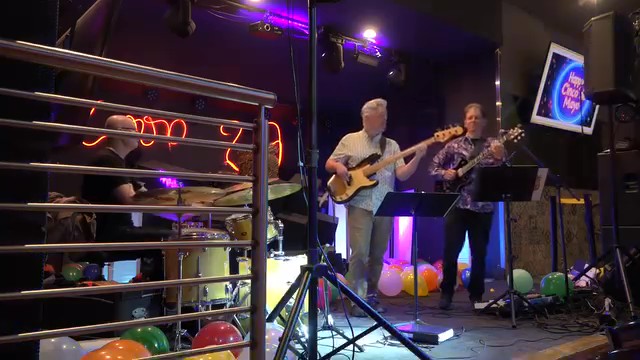 environment if the people around him feel taken for granted. I want the artistic standards to remain high while becoming more generous and expressive in how I recognize what other people contribute.
Presence Matters as Much as Preparation
One sentence from my original intention surprised me when I reread it. I had written that presence is as important as preparation, and that beyond being organized and prepared, I wanted to be relaxed, listening, and fully engaged with what was happening in the music. Interestingly, that has become one of the central things I am studying now.
In my lessons with Ronan, we have been exploring space, interaction, phrasing, rhythm, and how to respond to what the other musicians are actually playing rather than filling every available moment. It is particularly relevant to playing in a guitar-bass-drums trio, where the absence of another harmonic instrument creates both responsibility and freedom. I can fill more space if I want to, but that does not automatically mean I should.
I have spent decades learning how to do more on the guitar. More vocabulary, more harmony, more rhythm, more technique, more ways of filling space, and more ways of shaping a solo have all been part of my development. There is another level of musicianship in learning when not to use all of it.
That seems connected to everything else I am learning right now. Musically and personally, perhaps the next step is not always more effort, more notes, more projects, or more activity. Sometimes the next step is more awareness.
Presence changes the way a musician listens, but it also changes the way a person lives. If I am constantly rushing toward the next gig, lesson, email, rehearsal, networking event, or goal, I may be physically present while mentally living somewhere else. That is not the kind of musical or personal life I want to create.
The Problem With Working Harder
This first year has also forced me to confront the limits of hustle. I know how to work hard, and I have done that my entire career. Persistence is one of my strengths, and much of what I have created would never have existed without it.
But there have been weeks recently when I taught, rehearsed, drove long distances for gigs, exercised, handled marketing, attended networking events, managed bands, and tried to keep several businesses moving at once. Eventually my body gave me a very straightforward message: this is too much. At that point, more discipline is not the solution.
There is a strange danger in being highly self-motivated. When something is not working, your instinct is to add more effort because effort has solved so many problems before. You make more calls, take more gigs, find more students, do more networking, create more marketing, schedule more rehearsals, and start more projects.
Eventually “more” stops being a strategy. If I am exhausted enough that I cannot think clearly, enjoy my marriage, meditate consistently, or appreciate the music I worked so hard to create, then I have missed part of the point. A full calendar and a meaningful life are not the same thing.
The challenge for the next year is not proving that I can work harder. I already know that I am capable of pushing myself beyond what is sustainable. The challenge is making the work produce a better life.
That means better choices rather than simply more activity. It means asking which parts of the business actually work, which artistic projects matter most, and what needs to be reduced or eliminated. It also means treating rest, spiritual practice, health, and my marriage as part of the structure rather than whatever receives the leftover hours.
This is where gratitude becomes important again. If I am so preoccupied with building the next thing that I cannot appreciate twelve gigs in a month, a joyful jazz trio, students who are growing, a wife I love, a home near the ocean, and musicians who are helping bring my ideas to life, then increased success will never feel like enough. Gratitude has to be part of the life I am building, not simply something I promise to practice once everything else is solved.
My Intention for Year Two In Myrtle Beach
I am glad I moved to Myrtle Beach. This first year has confirmed that there is considerably more musical possibility here than I had before, and I am already becoming busier as a performer. I am meeting musicians, finding venues, developing projects, playing styles of music that matter to me, and learning a tremendous amount about what I actually want.
The move itself, however, was never going to transform my life automatically. A new city gives you different raw material, new relationships, different markets, new challenges, and different possibilities. You still have to decide what to build with all of it.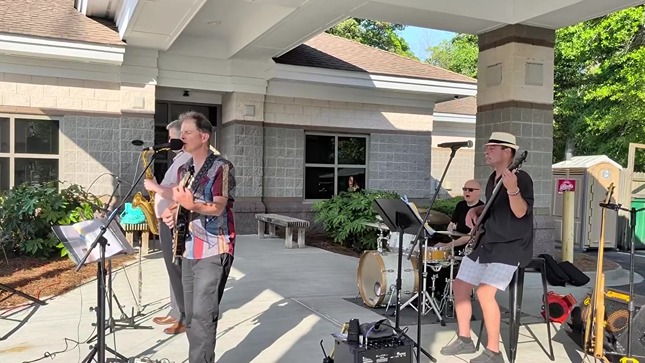
During year one, I planted a lot of seeds. Some grew quickly, some barely grew at all, and some revealed that I had been planting in the wrong place. The fact that several of those seeds are already producing recurring gigs, returning clients, collaborations, and stronger musical projects makes me very grateful for what has happened so far.
Year two needs to be more intentional. I want to deepen Sunset Salsa rather than merely accumulate Latin gigs, develop a more consistent jazz presence rather than simply accept random jazz dates when they appear, and cultivate solo instrumental guitar because it connects directly to the musician I want to become. Those are the musical directions that currently feel most alive to me.
I also want to continue Blue Train, The Way Band, and solo guitar-and-voice work. Blue Train has developed far more momentum here than I expected, The Way Band can serve weddings and private events effectively, and solo vocal work remains both useful and enjoyable. The goal is not to eliminate half of my musical life in the name of specialization; it is to understand which projects nourish me artistically and which serve other important purposes.
I want more collaboration too. Part of the original vision was community, and I do not want independence to become isolation. Creating my own projects and being open to other people’s projects do not have to be opposites.
The same applies to Guitar Lessons Myrtle Beach. I need to stabilize cash flow, improve retention, continue attracting new students, and build a student community that eventually has a life of its own. If students begin jamming together, supporting each other, and forming relationships beyond their weekly lessons, I will know that something much deeper than a teaching schedule is developing.
I also need to protect time with my wife, restore meditation to its proper place in my life, and stop treating exhaustion as evidence that I am sufficiently committed. Those concerns may appear separate from music, but they are not. They determine whether the artistic life I am building is actually sustainable.
A musical life is still a life. If one part succeeds by destroying everything surrounding it, the success is incomplete. I want the artistic, financial, relational, spiritual, and physical parts to reinforce one another rather than compete for whatever energy remains.
Creating Instead of Waiting
After almost a year here, I am no longer waiting for somebody else to give me the musical life I want. That does not mean I have lost interest in collaboration or that I believe I should do everything alone. In fact, one of my hopes for year two is that collaboration becomes an even larger part of what I am doing.
If someone invites me into a wonderful project and it fits, I am open to it. Collaboration is one of the great joys of being a musician, and some of the best things I have ever played have happened because another musician created an opportunity I could never have created alone. The difference is that I no longer believe another person’s invitation is evidence of my value.
Nor is their lack of an invitation evidence of the opposite. My job is to cultivate my musicianship, develop my imagination, create worthwhile projects, treat people well, remain open to collaboration, and continue putting music into the world. Then other people get to decide whether they want to participate.
Some will, and some will not. Some relationships will deepen, others will remain casual, and certain musicians I hoped to work with may never become part of what I am doing. That is all part of the process.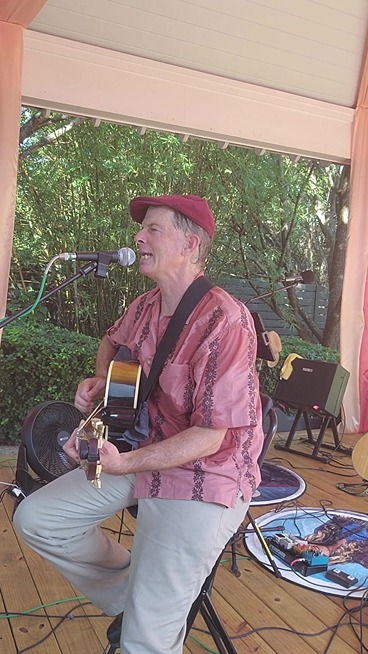
Before moving, I wrote that I wanted to approach this chapter with imagination, intention, organization, persistence, and what I called “relaxed certainty.” Looking back over the first year, I think I have demonstrated plenty of imagination, organization, and persistence. Relaxed certainty is my new work in progress.
For me, relaxed certainty does not mean assuming that everything will magically work out. It means doing the work without treating every disappointing gig, unanswered message, lost student, financial setback, or slow month as evidence that the entire vision is failing. It means being able to hold a direction while remaining flexible about exactly how I get there.
I want to create without desperation, work without destroying myself, lead without controlling, and invite without needing acceptance. I want to admire other musicians without comparing myself to them and make music that is strong enough to stand on its own while remaining generous enough to leave room for other people inside it. I also want to notice what is already working instead of constantly postponing gratitude until some imaginary future in which everything has finally been solved.
As I look at twelve gigs on the October calendar, several functioning musical projects, new musician relationships, returning clients, a teaching business that is still rebuilding, and a home less than five minutes from the ocean, I have a great deal to be grateful for. None of that erases the challenges ahead, and there is still important work to do financially, spiritually, relationally, and artistically. But I am not starting year two from nothing.
That is a very different vision from the one in which success depends on somebody finally recognizing me and offering me the perfect opportunity. It puts far more responsibility on me, but it also creates far more freedom. Instead of waiting for the right musical life to arrive, I can continue building it while appreciating the life that is already taking shape.
That is the musical life I want now, and I am grateful that after less than a year in Myrtle Beach I can already see signs of it becoming real. It may take years to fully develop, and it will certainly change as I change. But unlike the one I spent years waiting for someone else to offer me, this one is mine to create.
—
If you are planning a wedding, private party, or corporate event and you want to explore your options for musicians to provide live music, book a free music consultation with me or simply write to me on the contact page.
