The Emotional Impact of Solo Guitar and Voice
In the hushed tones of an acoustic guitar and the natural expressiveness of the human voice, something unique happens—something that often gets overlooked until you experience it in person. On paper, solo guitar and voice can seem simple, even minimal compared to a full band or DJ. But in the right setting, that simplicity becomes a strength rather than a limitation. It allows the music to shape the atmosphere in a way that feels natural, unobtrusive, and deeply connected to the moment.
Unlike larger productions, where the music can sometimes take center stage by necessity, solo performance has the ability to blend into the environment while still elevating it. It doesn’t demand attention—it earns it quietly. And because of that, it often creates a more meaningful and memorable experience for the people in the room.
A Real Example: The Yacht Club Wedding
At a recent yacht club wedding, I had the opportunity to begin the celebration with a solo performance during cocktail hour. The setting itself was already doing a lot of the work—waterfront views, open skies, and a relaxed, anticipatory energy as guests arrived and settled in. People were greeting each other, reconnecting, and taking in the environment, and the last thing the moment needed was something that disrupted that flow.
As I started playing, I noticed something that I’ve come to recognize as a sign that things are working exactly as they should. Conversations continued effortlessly, laughter carried across the space, and guests moved naturally from one interaction to the next. Every so often, someone would pause for a moment, recognize a song, smile, and then return to their conversation without missing a beat.
That balance is everything. The music was clearly present, but it wasn’t competing with the event—it was supporting it. It became part of the environment rather than something separate from it, and that’s where solo guitar and voice really begins to shine.
What Most People Don’t Realize Until They Experience It
 When couples are planning an event, they often focus on the playlist—what songs will be played, what genres they want, what vibe they’re going for in a general sense. Those things matter, of course, but they’re not what ultimately determines how the event feels in real time. What matters far more is how the music interacts with the space and the people in it.
Two factors rise to the top almost immediately: volume and vibe. These are not separate considerations—they are deeply connected, and getting them right is what allows everything else to fall into place. If the volume is even slightly too high, conversations become strained, and the entire room starts to feel tense without anyone quite knowing why.
Most people don’t realize how critical this is until they experience it done well. When the volume is right and the vibe is aligned with the moment, people relax, conversations flow more easily, and the entire event feels more cohesive. It’s not something guests usually articulate directly, but they feel it, and it shapes their experience in a very real way.
The Role of the Performer: Facilitator, Not Centerpiece
There’s a common assumption that live music should draw attention to itself—that the performer should, in some way, be the focal point of the room. In some contexts, that’s absolutely appropriate, especially later in an event when energy and participation are the goal. But in many of the most important parts of an event, particularly early on, a different approach is far more effective.
I don’t see my role in those moments as being “the star” of the show. Instead, I see it as facilitating the atmosphere that the event is trying to create. That means constantly reading the room, paying attention to how people are interacting, and adjusting accordingly in real time.
Sometimes that means pulling the dynamics back so conversations can breathe. Other times it means leaning into a moment slightly to give it shape and direction. Either way, the focus stays on the event itself, not on me, and that shift in mindset makes a noticeable difference in how everything feels.
Why I Don’t Use Backing Tracks
Over the years, I’ve experimented with different ways of expanding the sound of a solo performance, including using a looper and other tools that can simulate a fuller arrangement. While those approaches can be effective in certain contexts, I’ve gradually moved away from them for most events. The reason is simple: flexibility matters more than fullness.
When everything is happening live, without anything pre-recorded or layered in advance, I can respond instantly to what’s happening in the room. If the energy dips, I can adjust. If the room gets quieter, I can soften immediately. If a moment calls for space, I can create it without anything getting in the way.
That level of responsiveness is difficult to achieve when parts of the performance are locked in. By keeping everything live and fluid, the music stays connected to the moment rather than existing independently of it. Read more on this here.
The Hidden Skill: Managing Volume and Balance
One of the less obvious challenges of solo guitar and voice performance is managing the balance between rhythm and melody. When you’re accompanying yourself, chords naturally feel full and present, while single-note lines can feel like they lose weight by comparison. A common reaction is to simply turn everything up, but that usually creates more problems than it solves.
Instead, I approach it from the opposite direction. I keep the chordal playing very controlled and relatively soft, while maintaining enough overall volume to allow the single-note lines to come through clearly when I dig in a bit more. This creates a natural dynamic contrast without causing sudden jumps in volume.
From the listener’s perspective, it feels smooth and connected. Nothing disappears, and nothing becomes overwhelming. It’s a subtle thing, but it plays a big role in keeping the overall vibe of the event intact. Read my Ultimate Guitar article on this here.
Where This Format Really Shines
Solo guitar and voice tends to work best in settings where connection and flow are more important than sheer energy. Cocktail hours are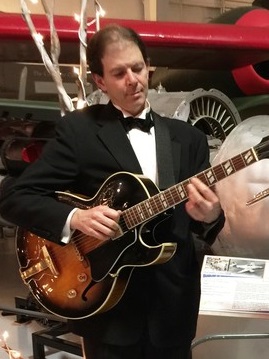 a perfect example, as are smaller weddings, private parties, and more intimate gatherings like baby showers or restaurant settings. In these environments, people are there to interact with each other as much as they are to experience the event itself.
Because of that, the music needs to support conversation rather than compete with it. It should enhance the environment without dominating it, adding a layer of warmth and character without pulling focus away from the people in the room. When done well, it creates a sense of ease that’s hard to replicate with louder or more production-heavy options.
It can be helpful to think of different types of live music in terms of what they’re designed to do. A full band is often about creating a shared, high-energy experience that brings everyone together in a very direct way. Solo guitar and voice, on the other hand, is more about shaping the environment those experiences happen within.
Neither approach is better or worse—they simply serve different purposes. But when the goal is to create a setting where people feel comfortable, connected, and present, the simplicity of guitar and voice can be surprisingly powerful.
Final Thoughts
At the end of the day, the best performances are not the ones where the musician stands out the most. They’re the ones where the entire event feels effortless, where everything seems to flow naturally from one moment to the next. When that happens, the music has done its job, even if no one is consciously thinking about it.
That’s what I’m aiming for every time I play solo guitar and voice. Not to take over the room, but to support it in a way that helps everything else fall into place. When the volume is right, the vibe is aligned, and the focus stays on the event itself, the result is something that people remember—not because it was loud or flashy, but because it felt right.
—
If you’re thinking of having live musicians at your next event, book a free music consultation with me or tell me details about the event via the contact page.

