The Movie “Whiplash” and the Wrong Conversation about Music
When I first sat down to watch Whiplash, I was expecting an intense drama about the pursuit of musical excellence. What I didn’t expect was how strongly I would react as a professional musician who has spent decades practicing, performing, and teaching.
The film has been widely praised for its acting, tension, and storytelling. It won Academy Awards, made audiences sweat, and left people debating its themes long after the credits rolled. But among musicians—especially jazz musicians—the reactions have been far more complicated. Many of us walked away feeling that Whiplash sends a deeply misleading and even harmful message about what music is, what motivates artists, and what teaching should be.
In this essay, I want to share my personal response to Whiplash, connect it to what other musicians have said, and reflect on what I believe the film gets wrong about music, integrity, teaching, and artistry.
Music Is Not a Sport
The first and most glaring problem with Whiplash is that it frames music as if it were a competitive sport. The main character, Andrew Neiman, is depicted as a driven young drummer pushing himself past exhaustion under the brutal guidance of conductor Terence Fletcher. Their relationship resembles that of a ruthless coach and a rookie athlete striving to win at all costs.
But music is not a competition. Music is an art.
Art does not thrive on intimidation, cruelty, or the zero-sum mentality of winners and losers. Great artists like Charlie Parker didn’t spend endless hours practicing because they wanted recognition, status, or to beat the competition. They practiced because they were inspired, because they loved the sound they heard in their heads and wanted to bring it into the world.
Yes, Parker was disciplined in his practice routine (at least for a time), but that discipline was fueled by passion. That’s true of every great musician I’ve ever known. The long hours of practice are not acts of punishment or self-denial; they are acts of joy.
This is the fundamental truth that Whiplash misses. Instead of showing music as a spiritual, expressive force, the movie depicts it as a grueling test of willpower. And while that makes for a gripping cinematic drama, it is dishonest about what music actually is.
Passion vs. Discipline
I practice long hours myself, even at 55 years old. Some people tell me I practice too much. But the reason I do it isn’t because I’m trying to prove anything or gain recognition. I do it because I love music. Practicing is not a chore for me—it’s a source of joy, a way to deepen my connection to sound, creativity, and spirit.
That’s the reality for most musicians I know. Discipline is there, yes, but it is always second to passion. Passion fuels discipline—not the other way around.
The way Whiplash portrays practice—as self-punishment in the pursuit of greatness—sends the wrong message to anyone who watches it and thinks this is how musicians are made. It is not.
The Abusive Teacher Dynamic
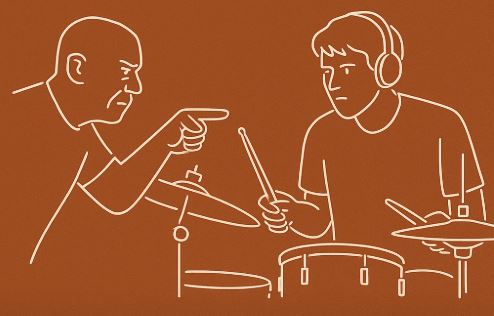
Then there is the relationship between Fletcher and Andrew. Fletcher is manipulative, cruel, and physically and emotionally abusive. He throws chairs, uses humiliation as a weapon, and pushes Andrew to the point of bleeding hands, car accidents, and mental breakdowns.
And yet, in the movie’s climactic act, Andrew goes back to play with him again—even after Fletcher deliberately sabotages his reputation onstage.
This, to me, is one of the most disturbing elements of the film. The idea that a student would return to an abusive teacher, and that this choice would be portrayed as the path to artistic greatness, is profoundly wrong. In reality, great teachers inspire. They don’t tear down. They don’t manipulate. They don’t cultivate fear.
Adam Neely, in his critique of the movie, points out that the abusive pedagogy depicted in Whiplash has nothing to do with real jazz education. Jazz musicians, he emphasizes, grow through collaboration, mentorship, and joy—not through humiliation. Legendary drummer Peter Erskine echoed this, saying:
“I’m disappointed that any viewer of the film will not see the joy of music-making that’s almost always a part of large-ensemble rehearsals and performances. Musicians make music because they LOVE music. None of that is really apparent in the film.”
Integrity and Artistry
Even if we set aside Fletcher’s abuse, the resolution of the film leaves much to be desired. After being sabotaged on stage, Andrew redeems himself with a blazing drum solo that wins over the audience—and finally earns Fletcher’s approval. The movie ends with Andrew and Fletcher sharing a wordless moment of mutual recognition.
But where is Andrew’s integrity?
The nobler action would have been for Andrew to stand firmly against Fletcher, to openly declare to the world that yes, he was the one who reported Fletcher’s abuse, and that he would not accept further humiliation for the sake of applause. Instead, the film celebrates Andrew for winning Fletcher’s approval through sheer willpower and technical brilliance.
This is another place where the movie sends the wrong message: that recognition and status are more important than integrity, artistry, and self-respect.
True musicianship is not only about how well you play your instrument—it’s about who you are as a human being. Without integrity, musicianship will always fall short.
The Wrong Conversation
Some defenders of Whiplash say it’s meant to spark controversy—that the film intentionally provokes debate about the cost of greatness. That may be true, but I believe it’s the wrong conversation altogether.
The controversy becomes: Was Fletcher right to push Andrew that far? Did Andrew do the right thing by playing through the abuse and “proving himself”?
But these are not the questions we should be asking.
The real conversation should be: How does music heal? How does it uplift people? How does it connect us, make us better human beings, and bring joy into the world?
By framing music as a battlefield between an abusive mentor and a broken student, Whiplash pulls us away from the true spiritual and healing power of music. That, to me, is its greatest failure.
What Other Musicians Are Saying
I am not alone in this critique. Musicians around the world have voiced similar concerns.
-
On Reddit, musicians have described Whiplash as both inspiring and discouraging—encouraging in its intensity, but disheartening in its misrepresentation of jazz culture.
-
Adam Neely called the movie “more like a sports drama than a jazz story,” pointing out that it idolizes Buddy Rich—an outdated figure—while ignoring the contemporary drummers who actually inspire today’s students.
-
Jazz writers at The New Yorker have gone so far as to say the film presents a “grotesque caricature of jazz.”
-
Peter Erskine, as mentioned, lamented the absence of joy in the depiction of ensemble playing.
There is a clear pattern: while audiences may love the film, musicians often recoil at how it portrays their art form.
My Personal Prayer
In reflecting on Whiplash, I feel moved to offer a kind of prayer for myself and for the role of music in my life.
I pray that I continue to be a musician who uplifts, heals, and contributes positively to the well-being of the world. I hope to grow not only in skill and knowledge but also as a compassionate, loving, and respectful human being.
I want to remember that music is sacred. That it makes weddings, parties, and corporate events special not because of recognition, money, or approval, but because it connects people and brings joy.
May I always put spirit first, before material rewards. May I never lose sight of the beauty, power, and love that music helps us feel.
The Role of a Teacher
Finally, I want to reflect on teaching.
A teacher’s role is not to instill fear. It is not to break students down or manipulate them into working harder. Real teaching is about providing inspiration, showing possibilities, and encouraging exploration.
Yes, there are technical skills, organizational strategies, and information that must be passed down. But true motivation can never come from the outside. It can be influenced externally, but ultimately it is internal.
My prayer as a teacher is that I remain inspiring, flexible, tolerant, open, and creative. That I show my students possibilities, rather than confining them with rigid discipline or fear.
Conclusion
Whiplash is a powerful film. It is brilliantly acted, tightly written, and emotionally gripping. But as a portrayal of music, it is dangerously misleading.
It frames art as sport, passion as punishment, teaching as abuse, and recognition as the ultimate prize. It leaves out the joy, the collaboration, the integrity, and the spiritual essence that make music what it truly is.
I hope that when people think about music after watching Whiplash, they don’t imagine it as a battlefield of humiliation and discipline. I hope they think instead about the beauty of sound, the healing power of rhythm and melody, and the joy of creating something that connects us all.
Because at the end of the day, music is not about winning. Music is about love.
—
If you are planning a wedding, private party, or corporate event and you want to explore your options for musicians to provide live music, book a free music consultation with me or simply write to me on the contact page.

