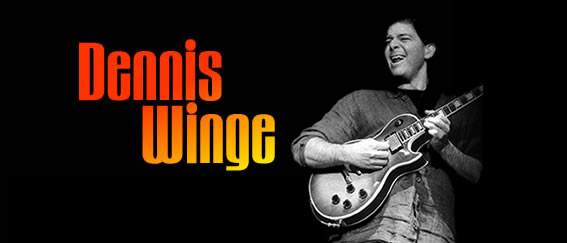

Featured Article in South Carolina Voyager: What 25 Years in Music Has Taught Me
I was recently honored to be featured in South Carolina Voyager, where I had the opportunity to talk about my work as a guitarist, educator, bandleader, and creative musician here in Myrtle Beach. Whenever something like that happens, people naturally tend to focus on the visible side of a musical career: the performances, the bands, the albums, the events, the years of experience, and the accomplishments that can be summarized neatly in a short interview or biography.
What often gets left out are the moments underneath all of it. The insecurity. The confusion. The frustration. The periods where you feel stuck even though you are practicing constantly. The moments where you realize that despite years of work, there are still enormous gaps in your playing, your understanding, your feel, or your ability to truly connect with the music and the people listening to it.
Feeling Stuck Can be a Huge Advantage
Ironically, those moments are often the ones that shape us the most. When I look back over more than 25 years of teaching, performing, studying, recording, and writing music, I realize that the most important lessons I learned rarely came from moments where I felt successful. Most of the biggest breakthroughs in my life came from moments where I felt uncomfortable, humbled, frustrated, or completely lost.
At the time, those moments felt discouraging. Now, I see them differently. One of the biggest turning points I ever experienced happened years ago when I was performing with a conga player from the Caribe Jazz All Stars in Ithaca, New York. At that point, I was already deeply interested in rhythm, Afro-Cuban music, and expanding beyond standard rock and blues vocabulary. I had spent years studying theory, technique, improvisation, and advanced musical concepts, and I felt reasonably confident in my abilities.
After the gig, he told me very directly that I was rushing. Naturally, I went back and watched the video afterward. Sure enough, he was absolutely right. The groove was moving forward too aggressively, and instead of relaxing into the feel of the music, I was unintentionally pushing against it.
That moment bothered me deeply. Not because I was criticized, but because I realized something fundamental. I had spent years focusing on scales, harmony, improvisation, advanced rhythmic ideas, odd meters, and difficult concepts, while still struggling with one of the most basic and important aspects of music itself: feel.
That realization changed the direction of my musical life. It forced me to confront something I now believe is missing from a lot of modern music education. Many musicians spend enormous amounts of time learning information about music while spending far less time deeply internalizing pulse, groove, feel, phrasing, relaxation, and rhythmic awareness. We become intellectually informed about music without always becoming physically connected to it.
Listeners, however, experience music physically first. Before people analyze harmony or melodic sophistication, they feel pulse, energy, movement, tension, release, groove, momentum, and interaction. If the rhythm and feel are not convincing, it becomes difficult for the rest of the music to fully connect emotionally no matter how advanced the concepts may be.
That realization pushed me much deeper into rhythm study. Ironically, the deeper I went into advanced rhythmic concepts like odd meters and metric modulation, the more I realized I needed to strengthen the fundamentals. Sometimes musicians become attracted to complexity because complexity feels impressive. There is absolutely nothing wrong with advanced concepts, and I still love studying and exploring them, but advanced concepts cannot compensate for weak time-feel or disconnected groove.
In many ways, simple things became harder and more profound to me over time. Playing relaxed quarter notes with great feel can actually be harder than executing a flashy technical passage. Locking into a groove consistently for an entire performance can be harder than playing something complicated in the practice room. Playing with patience and confidence can sometimes require more maturity than playing fast.
Music Exposes Everything
At the same time all of this was happening, I was also confronting another major gap in my musical understanding. Around age 27 or 28, somebody brought a chart for “My Funny Valentine” into an R&B band I had started. Up until that point, I already considered myself a fairly accomplished guitarist. I had experience performing, writing songs, playing in bands, and learning by ear, and I felt confident in many musical situations.
Then I looked at that chart. Honestly, I could barely make heads or tails of what was happening harmonically. I took the chart with me on a weekend trip and listened repeatedly to the Miles Davis version hoping that eventually something would click into place.
It did not. At the time, I really had no idea what was going on. That experience was incredibly humbling, but it also became the beginning of a much deeper musical journey. I decided to start taking jazz guitar lessons seriously, eventually studying with players like Jack Wilkins, and suddenly I realized how much I still had to learn.
I also remember feeling like I had started too late. When you begin seriously studying jazz improvisation in your late twenties, it is very easy to compare yourself to musicians who started much younger. I remember feeling behind constantly. Even while making progress, there was still a voice in the back of my mind wondering if I had missed some invisible window of opportunity.
Growth in Music is not Linear
Musicians often imagine improvement as a straight upward line where consistent practice automatically produces predictable progress. Real musical development is usually much messier than that. Sometimes you make huge leaps forward very quickly, and other times you feel stuck for months while important things quietly develop underneath the surface.
Sometimes you even discover that the thing you thought was advanced was actually distracting you from something more fundamental.
That has happened to me many times.
Over the years, I started noticing similar patterns in many musicians around me. I met players with excellent technique, strong theoretical understanding, and impressive musical vocabulary who still felt creatively frustrated or emotionally disconnected from their playing. They often could not fully explain what was wrong, only that something still felt incomplete.
I understood exactly what they meant because I had experienced it myself.
In many cases, these musicians were primarily playing with their heads instead of their bodies. Again, I say that carefully because I still catch myself doing it too. Music is physical, and when musicians become disconnected from the physical side of rhythm and feel, the playing can become technically correct while emotionally flat.
The audience senses this immediately even if they cannot explain why.
People respond to conviction, feel, groove, interaction, confidence, and emotional presence. If the music does not feel good to the musician internally, it often will not feel good to the audience either.
That realization became one of the major reasons I became so passionate about teaching rhythm and creativity.
After recording my album What Are the Odds, which explored odd meters and more advanced rhythmic ideas, I became even more fascinated by rhythm as a creative tool. At the same time, I realized I still needed deeper work on feel, groove, pulse, and rhythmic awareness itself.
For about five years, I studied rhythm with a drummer. Eventually, when he moved away, I continued searching and later began studying with internationally known bassist and educator Ronan Guilfoyle. I also worked through materials from Mike Longo and continued exploring rhythmic concepts through Afro-Cuban music, improvisation, composition, and performance.
Rhythm is not Simply a Technical Subject
Rhythm changes the way you experience music itself.
It changes your phrasing. It changes your confidence. It changes your interaction with other musicians. It changes how relaxed you feel on stage. It changes whether the music breathes naturally or feels forced and tense. In many ways, rhythm becomes the bridge between information and expression.
This also connects deeply to why I enjoy live performance so much.
Whether I am playing weddings, private parties, corporate events, jazz performances, salsa gigs, or student concerts, what interests me most is the interaction happening in real time between people. Music is not just notes. It is energy moving between musicians and audiences in a shared environment.
That is something I have become increasingly aware of over the years.
A great live performance is not simply about executing material correctly. It is about creating atmosphere, emotion, connection, spontaneity, and shared experience. Sometimes the moments people remember most are not technically impressive moments at all.
Sometimes it is a groove. Sometimes it is a subtle interaction between musicians. Sometimes it is a dynamic shift. Sometimes it is simply the feeling in the room. That understanding also strongly shapes the way I teach.
One of the best examples is the annual student concert we do through Guitar Lessons Myrtle Beach. Students spend weeks or months preparing songs, refining arrangements, rehearsing parts, and learning how to function inside real musical situations. The process forces them to think beyond isolated exercises and start making genuine musical decisions.
- What is my role in this arrangement?
- Should I play melody, rhythm guitar, fills, or solos?
- How do I lock into the groove with the rhythm section?
- How do I recover if I make a mistake?
- How do I support the overall sound rather than focusing only on myself?
These are real musical skills that only fully develop through experience. In many ways, I believe implementation is where true growth begins. You can study concepts forever, but eventually you have to apply them under pressure, in real time, with other musicians and real audiences. That is often where the deepest lessons occur.
My father used to joke that he learned to swim because somebody threw him into the river and he had to learn quickly or drown. In some ways, there is a version of that philosophy in how I teach music. I try to create situations where students are challenged enough to grow while still feeling supported enough to succeed.
That balance matters tremendously.
Too little challenge often leads to stagnation. Too much pressure leads to discouragement and fear. Somewhere in the middle is where people often experience those breakthrough “aha” moments that permanently change their confidence and understanding.
Creativity is Trainable
For many years, I genuinely believed creativity was almost mystical. I thought great songs, strong improvisations, and inspired musical ideas were things that simply arrived through magic or inspiration. I no longer believe that.
Creativity behaves much more like a skill than most people realize. The more consistently you compose, improvise, experiment, arrange, perform, and create, the stronger those abilities become. Instead of waiting for inspiration to appear, you gradually build systems and habits that allow creativity to emerge more naturally. That does not mean every idea will be amazing. In fact, most ideas are not amazing.
But if you continue creating consistently, eventually some ideas rise above the rest. In many ways, quantity becomes part of the path toward quality. The more experience you accumulate creating music, the more likely you are to discover meaningful ideas along the way. That is one reason I continue creating projects even when they feel difficult.
It is also why I created the Friday Rhythm Games series on YouTube. Every week, I challenge myself to explore and demonstrate new rhythmic concepts, ideas, and exercises. Sometimes those concepts are relatively simple, while other times they are genuinely difficult and take considerable time to internalize before recording the video.
Too many musicians feel pressure to present themselves as finished products who already have every answer. Personally, I am much more interested in remaining curious and continuing to evolve creatively. I would rather stay engaged in the learning process than pretend I have mastered everything already.
In many ways, learning and creativity are deeply connected for me. The more I study, the more ideas emerge. Sometimes a rhythmic concept becomes a composition. Sometimes a teaching challenge becomes a new practice system. Sometimes a groove experiment becomes inspiration for an arrangement or performance idea.
Music keeps opening new doors
Being featured in South Carolina Voyager gave me an opportunity to reflect on all of this. Looking back, I realize many of the moments that once felt discouraging eventually became some of the most valuable experiences I ever had.
- Getting called out for rushing
- Feeling lost trying to understand jazz harmony
- Feeling behind other musicians
- Struggling with groove
- Realizing technique alone was not enough
All of those moments pushed me toward deeper understanding. And honestly, after more than 25 years in music, I still feel like I am learning constantly. If there is one thing I would want musicians and audiences alike to take away from this article, it is that music is much deeper than information alone. Music is not simply about playing correct notes, accumulating knowledge, or demonstrating technical ability. Those things matter, but they are only part of the picture.
Music is also about feel. It is also about:
- emotion
- interaction
- timing
- presence
- communication
It is about making people feel something together in the same space and moment. That process can take an entire lifetime to deepen, and honestly, I think that is part of what makes music so meaningful. Whether I am performing through Dennis Winge Music, teaching through Guitar Lessons Myrtle Beach, recording albums, studying rhythm, or continuing to explore new creative ideas, the goal ultimately remains the same: creating meaningful musical experiences that connect people emotionally and creatively.
And in many ways, I still feel like I am only beginning to understand how deep that journey can really go.
If you are planning a wedding, private party, or corporate event and you want to explore your options for musicians to provide live music, book a free music consultation with me or simply write to me on the contact page.

