What Happened When We Combined our Party Band with our Latin Jazz Band
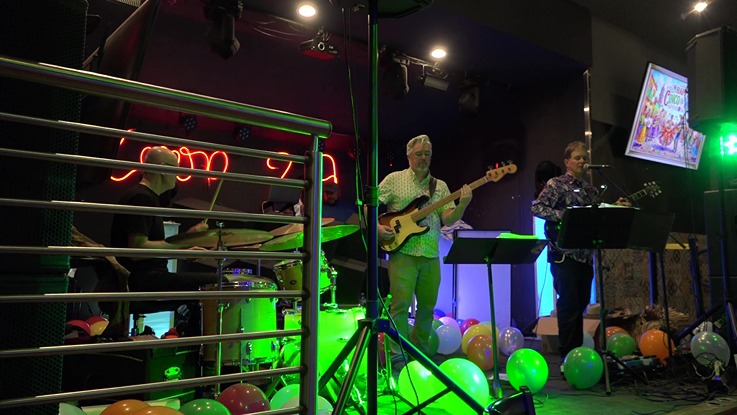 Every once in a while, a gig comes along that reminds me why I still love live music after all these years. Not because everything went perfectly, and not because it was the biggest or highest-paying event imaginable, but because something genuinely unique happened musically and socially that probably could not have been planned out in advance. That is exactly how I felt after our Cinco de Mayo event at El Cerro Grande Mexican Restaurant 29.
On paper, the concept almost sounds strange. One band, The Way Band, is a versatile party band built around rock, pop, dance music, singalongs, and crowd interaction. The other band, Sunset Salsa, focuses on instrumental Latin jazz, salsa, bachata, merengue, Afro-Cuban grooves, and extended improvisation. Most musicians would probably think of those as two completely different musical worlds.
But on Cinco de Mayo, those two worlds came together in a way that felt surprisingly natural.
The more I think about that night, the more I realize it reinforced something I have believed for a long time: audiences care far more about energy, authenticity, adaptability, and experience than they do about strict genre boundaries. Musicians often spend a lot of time worrying about categories, labels, and stylistic purity, but most audiences simply want to feel something. They want to connect. They want to have fun. They want to feel like the music is alive and responding to the room.
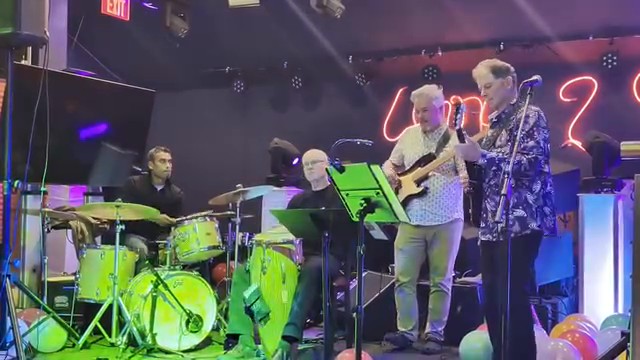
That is exactly what happened that night. Here is a video excerpt of the evening.
Walking Into the Chaos
When we arrived at El Cerro 29, it was immediately obvious this was not going to feel like a normal restaurant gig. The place was already packed, although I did not fully realize just how packed until later when a friend told me there had been a half-hour wait at the door just to get in. There were families, tourists, groups of friends, couples, and people of all ages filling the large room.
The atmosphere was festive before we even unloaded our gear.
As people walked toward the restaurant, Latino music was already blasting outside through speakers near the entrance. Decorations covered the building both inside and out. There were colorful cardboard Cinco de Mayo displays everywhere, bright lights throughout the room, and balloons all over the stage area that we somehow had to navigate while setting up our equipment.
I managed to break three balloons during setup.
Honestly, I felt bad about it for maybe two seconds before realizing there were still what felt like five million balloons remaining. Thankfully the stage still looked festive and colorful, and by the time the room filled up completely, nobody cared about the missing balloons anyway.
That actually became part of the charm of the night. It did not feel sterile or overly polished. It felt human. It felt alive.
Two Very Different Bands
One of the reasons this event stood out to me was because it represented something I have been increasingly interested in musically over the past several years: flexibility.
A lot of bands build their entire identity around one thing. One genre. One lane. One presentation style. There is nothing inherently wrong with that, and sometimes it works extremely well. But I have always been more interested in adaptability and serving the moment than forcing every audience into the exact same experience.
That mindset is part of why both The Way Band and Sunset Salsa exist in the first place.
The Way Band is built around versatility. We can move from classic rock to modern pop, from dance music to singalongs, from high-energy crowd favorites to more laid-back material depending on the room. We have a huge repertoire, and more importantly, we are comfortable adjusting in real time rather than rigidly sticking to a pre-planned script.
Sunset Salsa comes from another side of my musical personality entirely.
That group focuses much more heavily on Latin grooves, improvisation, instrumental interplay, Afro-Cuban rhythms, salsa, bachata, merengue, Latin jazz, and dance-oriented rhythmic music. The music often leaves more room for interaction between the musicians and more room for improvisation than many traditional party bands typically do.
Normally, those bands exist separately.
Cinco de Mayo gave us an opportunity to blend them together.
Letting the Night Develop Organically
One thing I definitely did not want to do was walk into a packed Myrtle Beach restaurant and immediately start blasting hardcore salsa arrangements at people while they were still sitting down with chips and salsa trying to order margaritas. That probably would have been a mistake.
Instead, we eased into the Latin material gradually.
That is one thing I have learned from years of performing live music in all kinds of environments: timing matters just as much as song choice. Reading the room matters. Sometimes musicians become so attached to what they personally want to play that they stop paying attention to how the audience is actually responding.
I never want to do that.
So rather than dividing the night into “now we are the rock band” and “now we are the salsa band,” we simply let things evolve naturally. We shifted back and forth organically based on instinct and audience energy. Some moments leaned more toward party-band material. Other moments leaned more toward Latin grooves and improvisation.
It never felt forced.
That was probably the biggest surprise of the night.
Why Santana Was the Perfect Bridge
If there is one artist who naturally connects rock audiences and Latin audiences, it is probably Santana.
Their music became the perfect bridge between the two sides of the evening.
We played songs like:
- “Black Magic Woman”
- “Oye Como Va”
- “Smooth”
- “The Game of Love”
Those songs worked beautifully because they already contain both worlds inside them. They have rock energy, strong grooves, singable melodies, and enough Latin rhythmic influence to transition naturally into more salsa-oriented material afterward.
That is another thing I found interesting about the night. Genre boundaries often feel much more rigid in musicians’ minds than they do in audiences’ minds.
Most audiences are not sitting there analytically categorizing everything. They are reacting emotionally. If the groove feels good and the energy feels authentic, they will usually go with you.
That is exactly what happened at El Cerro 29.
From Lynyrd Skynyrd to Salsa
At one point during the evening, we were playing material associated with Lynyrd Skynyrd. At another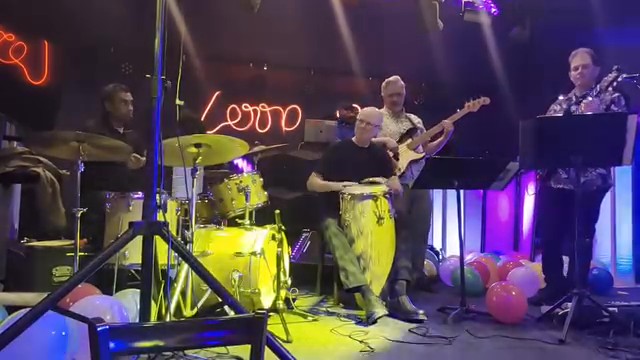 point, we were playing material associated with Taylor Swift. Later we were deep into Latin grooves and salsa rhythms.
On paper, that sounds ridiculous.
In practice, it worked.
I think part of the reason it worked is because we were not approaching the night academically. We were not trying to prove how stylistically diverse we were. We were simply trying to create a fun, engaging, organic experience for the people in the room.
That mindset changes everything.
People can sense when musicians are performing for ego versus when they are performing for connection. One creates distance. The other creates energy.
The crowd responded because the music was being shaped around the room itself rather than around some rigid artistic agenda.
The Crowd Slowly Opened Up
One thing I noticed was that the crowd did not immediately turn into a giant dance party. In fact, for much of the evening people were mostly eating, talking, hanging out, and enjoying the atmosphere.
And honestly, that was perfectly fine.
Sometimes musicians panic if people are not dancing immediately. They assume the music is failing somehow. But in restaurant environments especially, energy often builds gradually. People need time to settle in socially before they fully participate.
That is exactly what happened here.
As the night progressed, people loosened up. The hats started appearing everywhere. The drinks started flowing a little more. The room became louder, more interactive, and more playful.
Then eventually the dancing started.
And once it started, the whole room changed.
Tequila, La Cucaracha, and Shared Experience
Some of the most memorable moments of the night involved songs that were simply fun.
Not sophisticated.
Not musically complex.
Just fun.
When we played “Tequila,” the audience immediately jumped into the call-and-response portions. Everybody knows that moment. Everybody waits for it. There is something powerful about songs that invite participation so naturally that people cannot help joining in.
The same thing happened with “La Cucaracha.”
Hearing people singing along, laughing, wearing oversized straw hats, and genuinely participating in the music reminded me of something important: audiences do not necessarily remember the most advanced thing you played. They remember how the experience made them feel.
That matters.
As musicians, we sometimes overvalue technical complexity and undervalue emotional connection. But nights like this reinforce that creating joy is not a lesser goal. In many ways, it is the entire point.
The Hats Changed Everything
One surprisingly funny turning point happened around 9 o’clock when the venue began handing out straw hats to the crowd.
Suddenly the entire room visually transformed.
People who had been sitting quietly at tables started interacting more. Groups began taking pictures together. The atmosphere became even more playful and celebratory than it already had been. Everywhere you looked, there were giant hats, laughter, and movement.
That visual energy fed directly back into the music.
Live performance is never just about sound. It is about environment, interaction, timing, visual atmosphere, crowd psychology, and momentum. Once the room collectively decides to participate, everything becomes easier for the band.
That happened in a major way during the final stretch of the evening.
The Owner Joining In
One of my favorite moments of the night involved the owner of the restaurant.
Later in the evening, the DJ who would be handling the afterparty dance music was setting up nearby while we were still performing. The owner grabbed the microphone periodically and started chiming in during songs, hyping up the crowd, singing along to certain parts, and joking around between moments.
At one point he was yelling things like, “The Way Band is in the house!”
It was hilarious.
But it also revealed something important about successful events: the best events usually feel collaborative rather than transactional. The venue was not treating the band like background wallpaper. They were engaged. They were participating. They were part of the atmosphere themselves.
That energy spreads through a room incredibly quickly.
The Quartet Groove
Another major highlight for me was when my drummer friend Enoch sat in with us.
Normally Cliff handles drums with the band, but for this section Cliff moved over to congas while Enoch took over the drum set. Suddenly we had a quartet setup with both drum set and hand percussion happening simultaneously.
Nothing beats a good conga tumbao.
The second those congas locked in with the groove, the feel of the band changed completely. The music immediately became deeper rhythmically and more connected to the Afro-Cuban side of the music we love playing. It created an entirely different layer of movement underneath everything.
That is one of the reasons I love Latin music so much in the first place.
The groove itself becomes almost physical. People may not understand the theory behind it, but they feel it instinctively. Even audiences unfamiliar with salsa often respond physically to those rhythms once the groove becomes strong enough.
Why Flexibility Matters
If there is one lesson I walked away from that night thinking about more than anything else, it is this: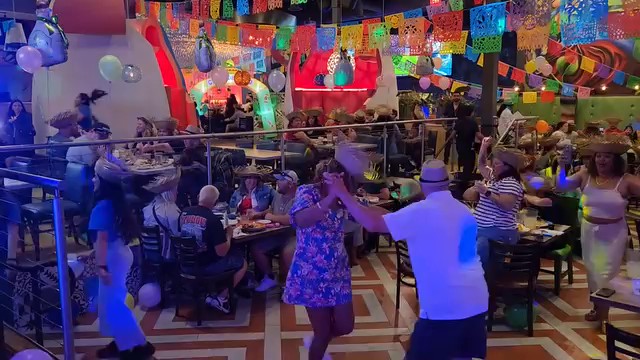
Flexibility may actually be our biggest strength.
Not just musically.
Professionally.
Emotionally.
Socially.
Creatively.
The ability to adapt to the room in real time is incredibly valuable, especially for weddings, corporate events, private parties, and large celebrations where audiences are diverse and energy shifts constantly throughout the evening.
Rigid bands often struggle in those environments.
If a band only knows how to deliver one exact experience, eventually they run into situations where that experience does not fully fit the crowd. But when musicians can shift naturally between styles, moods, energy levels, and audience needs, the event itself becomes more dynamic and personal.
That is what happened at El Cerro 29.
The Problem With Overplanned Live Music
One thing this night also reinforced for me is how much I value organic live performance over heavily automated performance.
That probably sounds ironic coming from someone talking about versatility and professionalism. But to me, professionalism does not mean becoming robotic. It means becoming responsive.
There is a major difference.
In Myrtle Beach especially, there are a lot of acts built heavily around tracks and pre-programmed arrangements. Again, I understand why some musicians do it. It can simplify logistics, reduce personnel needs, and create consistency.
But personally, I still believe there is something irreplaceable about genuinely live interaction between musicians.
You can feel it.
When musicians are responding to each other in real time, adjusting arrangements instinctively, extending sections, reacting to audience energy, and creating spontaneous moments, the music breathes differently. It feels alive because it actually is alive.
That unpredictability is not a weakness. It is the entire magic of live music.
The Work Behind the Scenes
At the same time, nights like this are also exhausting in ways audiences may not fully realize.
Being a bandleader is not simple.
During this event I was:
- singing
- playing lead guitar
- monitoring the crowd
- balancing volume levels
- communicating with band members
- adjusting styles
- transitioning between genres
- keeping energy flowing
- trying to remain welcoming and approachable
- managing logistics in real time
And because it was still fundamentally a restaurant environment, volume control mattered constantly. We wanted energy and excitement without overwhelming people trying to eat and socialize.
That balancing act is actually much harder than many people realize.
But honestly, I love that challenge.
There is something deeply rewarding about successfully navigating all those moving parts while still making the audience feel relaxed and entertained.
Audiences Want Experiences, Not Categories
One of the biggest conclusions I took from this night is that audiences often care far less about musical categories than musicians assume they do.
Musicians tend to think in terms of genres.
Audiences tend to think in terms of feelings.
Did the night feel fun?
Did the room feel alive?
Did the music create connection?
Did people laugh?
Did they sing?
Did they dance?
Did they leave feeling energized?
Those questions matter far more than whether a specific song technically belonged to one genre or another.
At El Cerro 29, people responded because the event felt alive and human. The combination of rock, pop, Latin jazz, salsa, bachata, Santana material, singalongs, percussion grooves, crowd participation, and improvisation created variety without losing cohesion.
In many ways, the variety itself became the identity.
Why This Matters for Events
This experience also reinforced why I enjoy weddings, corporate events, and private parties so much.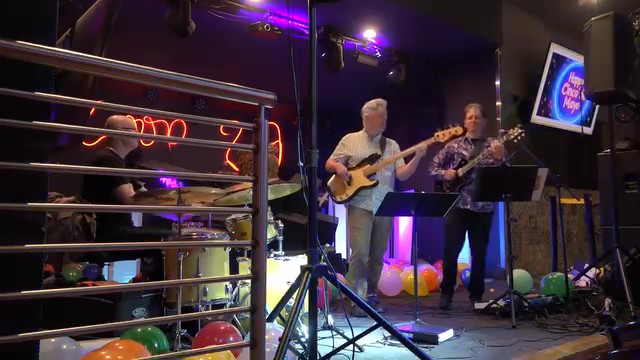
Customization matters.
Every crowd is different. Every room is different. Every event has a different emotional arc. Some groups want nonstop dancing. Some want sophisticated background music early and party energy later. Some want singalongs. Some want elegance. Some want variety.
The ability to combine different musical personalities into one adaptable experience is incredibly valuable.
That is part of what made this Cinco de Mayo event work so well. The venue did not have to choose between a straight salsa band and a straight party band. Instead, the audience got an evolving experience that could move fluidly between different energies throughout the evening.
Honestly, I think hybrid approaches like this may become increasingly valuable in the future.
The Best Moments Cannot Be Scripted
Looking back, some of my favorite memories from the night are things that never could have been planned perfectly in advance.
The owner grabbing the mic unexpectedly.
People screaming “Tequila!”
The hats appearing everywhere.
The gradual transformation from restaurant atmosphere into dance-party atmosphere.
The conga groove locking in.
People singing along to “La Cucaracha.”
The feeling of the room collectively loosening up over time.
Those moments happened precisely because the night was allowed to evolve organically rather than being rigidly controlled.
That matters.
Sometimes musicians become so obsessed with precision that they accidentally eliminate spontaneity. But spontaneity is often where the emotional magic actually lives.
Looking Ahead
After this event, I honestly think there is huge potential for more hybrid performances like this in the future.
I can absolutely imagine more Sunset Salsa events where clients also want rock and pop material integrated either later in the evening or interspersed naturally throughout the night. I can imagine weddings where Latin dance music blends with mainstream party material. I can imagine corporate events where sophisticated instrumental music gradually evolves into a dance-oriented atmosphere later on.
The possibilities are exciting because they are flexible.
And flexibility is ultimately what this whole night represented.
Not randomness.
Not lack of identity.
Adaptability.
Connection.
Reading the room.
Serving the event.
Creating experiences instead of just delivering songs.
Final Thoughts
When I think back on Cinco de Mayo at El Cerro 29, I do not primarily remember individual notes, solos, or technical details.
I remember energy.
I remember people laughing in giant straw hats.
I remember hearing the crowd yell “Tequila!”
I remember Santana grooves blending naturally into salsa rhythms.
I remember the owner jumping on the mic.
I remember the conga tumbao filling the room.
I remember a packed restaurant gradually transforming into a celebration.
Most of all, I remember being reminded why truly live music still matters.
Not because it is perfect.
Not because it is predictable.
But because when musicians, audiences, venues, and energy all start feeding each other in real time, something happens that no track, no rigid script, and no algorithm can fully recreate.
For one night at El Cerro 29, two very different bands became one evolving musical experience.
And honestly, I think that is exactly why it worked.
If you are planning a wedding, private party, or corporate event and you want to explore your options for musicians to provide live music, book a free music consultation with me or simply write to me on the contact page.

